
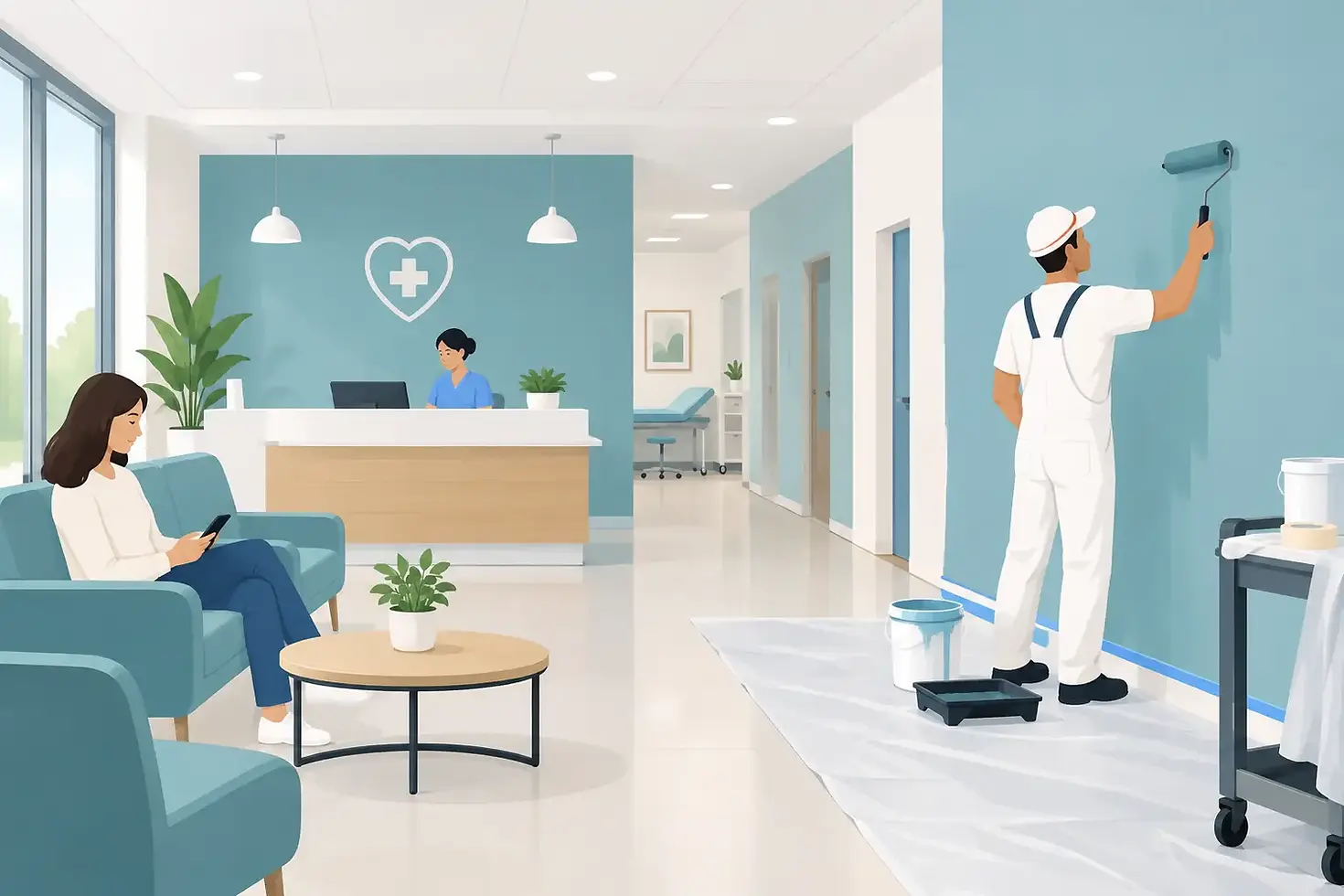
Medical Clinic Repaint With Less Disruption

A faded waiting room, marked hallway, or scuffed exam room can quietly change how patients perceive your practice. A medical clinic repaint is not simply a cosmetic update. It is a chance to reinforce cleanliness, professionalism, and patient confidence without creating unnecessary disruption for staff or appointments.
For clinic owners, office managers, and property decision-makers, the challenge is clear: the space needs to look better, but patient care cannot stop for a paint project. The right plan accounts for your schedule, high-touch areas, ventilation needs, and the people who rely on your facility every day.
Why a Medical Clinic Repaint Requires More Planning
Painting a medical office has different stakes than repainting a standard commercial suite. Patients may be anxious, mobility-limited, or sensitive to odors. Your front desk team needs to remain productive, and clinical staff need clear access to rooms, supplies, and equipment.
That does not mean a repaint has to be complicated. It means the contractor should begin with a thoughtful walkthrough and a defined plan. Before work starts, you should know which areas will be painted, when crews will be on site, how rooms will be protected, and what steps will be taken to keep the job contained.
A dependable painting company should also be comfortable working around your operating hours. Some clinics are best served by evening or weekend work. Others can be painted in phases, with one hallway, wing, or group of rooms completed at a time. The best approach depends on appointment volume, available alternate rooms, and the size of the facility.
Start With the Areas Patients Notice Most
Not every part of a clinic has to be repainted at once. If the budget or schedule calls for a phased project, start where the improvement will have the greatest impact on patient experience and daily wear.
Reception areas and waiting rooms are often the first priority. These spaces establish the tone before a patient ever meets with a provider. Clean walls, consistent color, and sharp trim make the environment feel organized and well cared for.
Hallways, door frames, and check-in counters also deserve attention. These high-traffic surfaces collect scuffs, handprints, and damage faster than quieter offices. A fresh coat of durable paint can make them easier to maintain while helping the entire facility look more polished.
Exam rooms matter too, especially when walls show wear around chairs, equipment, or wall-mounted dispensers. Here, the goal is not a dramatic design statement. It is a calm, clean-looking room that supports comfort and allows staff to focus on patient care.
Choose Colors That Support Comfort and Clarity
Color selection in a medical setting should be practical first. The right colors can make a clinic feel brighter, calmer, and more welcoming. The wrong choice can make rooms feel cold, overly busy, or poorly lit.
Soft neutrals, warm whites, muted greens, gentle blues, and light earth tones are often strong options for patient-facing spaces. They provide a clean appearance without feeling harsh. A warmer neutral may suit a family practice or dental office, while a quiet blue-green can work well in a wellness or specialty clinic.
Lighting should guide the final decision. A color that looks balanced under natural daylight may appear very different under overhead fluorescent or LED fixtures. Testing samples in the actual room helps prevent costly surprises after the full application is complete.
Accent colors can still have a role. Used sparingly, they can help distinguish a reception wall, create a visual cue near a check-in area, or support your practice branding. In most clinical environments, however, restraint produces the most lasting result. Strong trends may look dated quickly, while a well-chosen neutral palette stays professional for years.
Protect Operations Before the First Wall Is Painted
The quality of a medical clinic repaint depends as much on preparation as it does on the final coat. A professional crew should identify active treatment spaces, equipment locations, routes used by patients, and areas that cannot be blocked during the day.
Before painting begins, establish a room-by-room sequence with the clinic manager. Confirm when furniture will be moved, where staff can relocate temporarily, and whether certain rooms need to be completed between appointments. This avoids last-minute decisions that slow down your team.
Protection also matters. Floors, furniture, counters, and nearby equipment should be covered or moved as appropriate. Work zones should be kept orderly, with clear communication about which areas are temporarily unavailable. A clean jobsite is especially important in a medical environment, where patients expect attention to detail.
Ventilation and dry time should be part of the schedule as well. Low-odor paint products can help reduce inconvenience, but no paint project is entirely without an odor. Planning work during slower hours and allowing adequate time before a room returns to service is the responsible approach.
A Phased Schedule Keeps Care Moving
For many occupied clinics, a phased repaint is the practical answer. Instead of closing the entire office, the project is divided into manageable sections. Crews may complete administrative offices first, then waiting areas, hallways, and exam rooms in an order that fits your availability.
This method may take longer than painting an empty building, but it reduces the impact on appointments and revenue. It also gives staff a clear understanding of what to expect each day.
A realistic schedule should account for prep work, patching, primer where needed, coating application, and drying time. Rushing these steps can compromise appearance and durability. If walls have extensive damage, stains, peeling coatings, or old adhesive residue, the preparation phase may require more time. That is why a thorough estimate is more valuable than a quick price given without a walkthrough.
What to Expect From a Reliable Painting Contractor
Hiring painters for an active clinic can feel risky if the scope is vague or communication is inconsistent. You should not have to wonder whether the crew will arrive on time, whether the price will change unexpectedly, or whether your facility will be left in disarray.
Look for a contractor that provides a clear written scope, fixed upfront pricing, and a project schedule that reflects your actual needs. The estimate should define the surfaces being painted, the preparation included, and any known repairs or exclusions. If a condition cannot be confirmed until work begins, that should be explained clearly rather than hidden in fine print.
Experience with commercial interiors is valuable, but reliability is equally important. A professional team respects your front desk, your staff, and the patients walking through the door. They communicate before schedule changes, protect the property, and complete cleanup as carefully as they handle the painting itself.
At Pronghorn Painting, that standard means providing a straightforward process, licensed and insured service, and workmanship backed by a 2-year warranty. The goal is to make an improvement project feel organized from the first consultation through final walkthrough.
Plan for Durability, Not Just a Fresh Look
Medical facilities see frequent cleaning, rolling chairs, carts, door traffic, and contact along corridors and corners. Paint selection should match those real-world conditions. A finish that looks attractive on day one but marks easily can create a maintenance problem within months.
Higher-traffic walls often benefit from a washable, durable finish that allows routine cleaning without premature wear. Trim, doors, and frames may need a more resilient coating than the walls around them. The right recommendation depends on the substrate, current coating condition, cleaning practices, and how heavily the area is used.
This is also the right time to address small repairs that affect the finished appearance. Nail holes, dents, failed caulk lines, cracked corner bead, and damaged drywall can stand out even after fresh paint is applied. Taking care of these details helps the repaint look intentional rather than temporary.
Make the Final Walkthrough Count
Before the project is considered complete, walk the clinic with the contractor. Review painted rooms in normal lighting, inspect trim lines and repaired areas, and confirm that furniture and work areas have been returned as agreed.
A final walkthrough gives you the opportunity to raise questions while the crew and project details are still close at hand. It also confirms that your clinic is ready to welcome patients into a space that looks clean, cared for, and professional.
A well-planned repaint does more than cover scuffs. It shows patients and staff that the environment where care happens matters. When you are ready to improve your clinic without adding stress to the workday, start with a clear scope, a realistic schedule, and a painting team that treats your facility with the same care you do.


Comments